
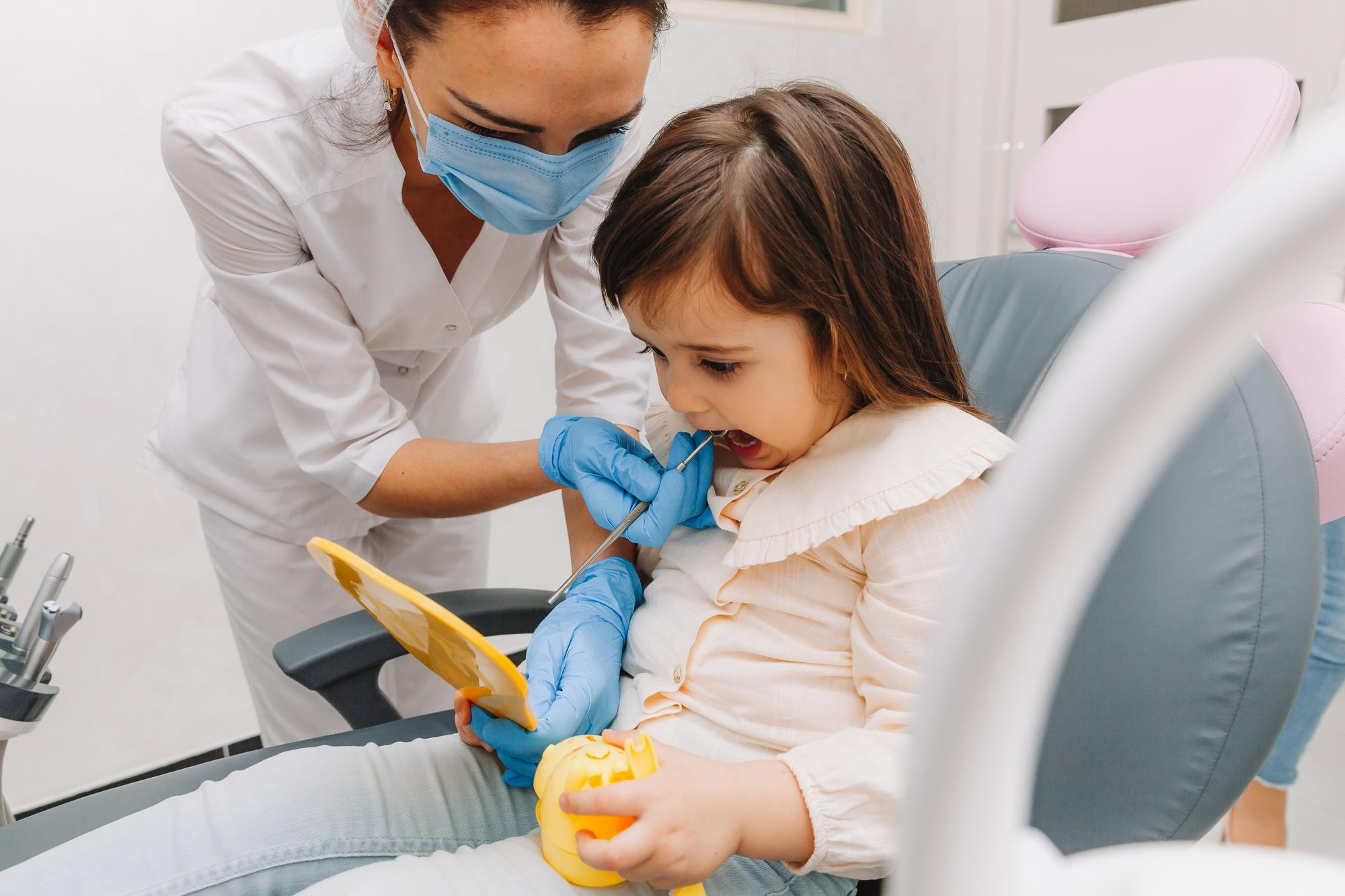

Many parents wonder whether cavities in baby teeth (primary teeth) are truly a cause of concern. After all, these teeth will fall out anyway, right? At Pediatric Dentistry of Poughkeepsie, we hear this question often.
Why Cavities in Baby Teeth Matter More Than You Think
While it is true that baby teeth are temporary, they serve several critical functions. They act as placeholders for permanent teeth, guiding them into the correct position.
If a baby tooth is lost early because of decay, nearby teeth might shift. This can lead to crowding and future orthodontic problems. Furthermore, primary teeth are essential for clear speech development and proper nutrition.
Identifying the Warning Signs of Tooth Decay
Early detection is the key to painless, affordable dental care. Cavities, also known as dental
caries, don’t always start as a visible hole. Often, the signs are subtle and can be easily missed
during a quick nightly brushing.
Common signs that your child might have a cavity include:
- Chalky White Spots: These spots usually show up near the gumline. They mean that the enamel is starting to break down.
- Dark Spots: Brown or black spots on the surface of the tooth are a clear indicator of advancing decay.
- Sensitivity: If your child winces when eating hot or cold foods, decay may have reached the inner nerves.
- Bad Breath: Bacteria from a cavity can create a lingering smell that brushing won’t fix.
Root Causes of Early Childhood Caries
The main cause of cavities in toddlers and young kids is a high-sugar diet and bad hygiene habits.
“Baby bottle tooth decay” happens when kids frequently drink sugary liquids, such as milk, formula, or juice. It’s especially common if a child goes to bed with a bottle.
The biological process of cavity formation follows a specific path:
The main cause of cavities in toddlers and young kids is a high-sugar diet and bad hygiene habits.
“Baby bottle tooth decay” happens when kids frequently drink sugary liquids, such as milk, formula, or juice. It’s especially common if a child goes to bed with a bottle.
- Plaque Formation: Bacteria in your mouth combine with food bits to form a sticky film known as plaque.
- Acid Production: When your child eats sugar, plaque bacteria make acid as a byproduct.
- Enamel Erosion: Over time, this acid eats away at the hard outer layer of the tooth (enamel).
- Dentin Penetration: When the enamel is broken, decay moves to the softer dentin layer,
creating a cavity.
Cavity Treatments at Pediatric Dentistry of Poughkeepsie
When we find a cavity, we aim to restore the tooth’s function. We also want to keep your child comfortable.
Depending on the severity of the decay, we may recommend a variety of treatments. For minor decay, a simple tooth-colored filling is usually sufficient. If the decay is severe, we might use a pediatric crown. This helps protect the remaining tooth structure.
Cavity Treatments at Pediatric Dentistry of Poughkeepsie
Your child’s primary teeth are important. They help create a healthy permanent smile and support overall health. So it’s important to take proper care while they’re still intact!
Preventing cavities is always better than treating them. To keep your child’s smile healthy, make sure they brush twice a day with fluoride toothpaste. Also, start flossing as soon as two teeth touch. Limit sugary snacks and encourage water as the primary beverage between meals.
Starting these habits early and visiting Pediatric Dentistry of Poughkeepsie often will give your child healthy smiles for life. We look forward to partnering with you in your child’s oral health journey!